

Key takeaways on commercial trucking insurance
- What commercial trucking insurance is
- Who needs it
- What coverages it includes
- What federal and Illinois rules require
- Why Chicago matters
- The 13 states we serve
- Ensure Inc. facts at a glance
- Which type fits your operation
- Video: growth and fleet insurance advice
- What affects the cost
- How to get a quote
- How it compares with the alternatives
- Common mistakes
- How to choose: five steps
- What the terms mean
- Who you will talk to
- Polish, Ukrainian and Russian
- Frequently asked questions
- How we verified this page
- Sources
- Update log
What is commercial trucking insurance?
Commercial trucking insurance covers the trucks, trailers, loads and people in a freight business. A personal auto policy is not written for hauling freight for pay, so a truck that works for a living needs a commercial policy built for it.
People search for it under many names: commercial truck insurance, trucking insurance, semi truck insurance, motor carrier insurance, owner-operator insurance and fleet insurance. The names overlap. What counts is the coverage list, the limits and the endorsements on the policy, and whether they match your authority, your contracts and your routes.
The anchor is primary liability, also called auto liability. It pays for injury and property damage you cause to other people, and it is the coverage FMCSA looks for before it grants operating authority. (FMCSA) Everything else is chosen around how you earn: whether you own the truck, lease it to a carrier, run your own authority, employ drivers or pull someone else’s trailer.
Who needs commercial trucking insurance?
Which coverage should you ask about first?
What coverages does commercial trucking insurance include?
Primary (auto) liability
Pays for injury and property damage your truck causes to others. FMCSA sets the minimum for most for-hire non-hazardous carriers with vehicles of 10,001 pounds or more at $750,000. UIIA, brokers and shippers may ask for $1,000,000 or more.
Physical damage
Covers your trucks and trailers against collision, fire, theft and vandalism. Ask about towing limits, rental coverage and downtime options.
Motor truck cargo
Covers loss or damage to the freight in your care. Federal rules do not require it for most property carriers; many brokers do. Limits and deductibles come from your contracts.
Non-trucking liability and bobtail
Non-trucking liability covers you when the truck is used for personal use, not under dispatch. Bobtail covers the tractor running without a trailer. Leased-on owner-operators are usually asked for it.
Occupational accident
Injury coverage for independent contractors: medical expenses, temporary and permanent disability, accidental death and dismemberment, survivor benefits.
Trailer interchange
Covers physical damage to non-owned trailers, chassis or containers in your care, custody or control. Required in some form by most UIIA equipment providers.
Commercial general liability
Covers claims not tied to operating the truck, such as premises injuries or property damage. The UIIA requires $1 million per occurrence for participants.
Workers’ compensation
Covers injuries to drivers classified as employees; required in most states. Fleets that lease owner-operators usually pair it with occupational accident for the contractors.
What do federal and Illinois rules require?
What is the federal minimum for trucking insurance?
The first row matches the schedule in 49 CFR 387.9, which sets $750,000 for for-hire carriers of non-hazardous property in interstate or foreign commerce with a gross vehicle weight rating of 10,001 pounds or more. (49 CFR 387.9; FMCSA chart) FMCSA also lists the MCS-90 endorsement (MCS-82 for surety bonds) for all for-hire and interstate motor carriers.
Three practical points from FMCSA’s page: FMCSA will not grant operating authority until the minimum is on file; after you apply, your insurer (the “financial responsibility provider”) files the forms for you, and the name and address must match your registration exactly or the grant is delayed; and once authority is granted you must keep proof of insurance on file to avoid revocation proceedings. Keeping filings current is your responsibility, so confirm the filing after every renewal or carrier change.
What does Illinois add?
Based in another state? Each state adds its own rules to the federal ones. See the 13 states we serve and the pages for Texas, Florida and Georgia.
What does commercial trucking insurance look like in Chicago?
Chicago is where a great deal of American freight changes hands. The Chicago Metropolitan Agency for Planning (CMAP) says that about 25 percent of all freight trains and 50 percent of intermodal trains in the United States pass through the region, that more than 7.8 million freight containers started or ended their trips there in 2016, and that trucks make up about one in seven vehicles on Illinois’ urban interstates. (CMAP freight page; the page is undated and most figures are from 2016 and 2017, so read them as scale, not as a current count.)
For a trucking company based in the Chicago area, that shows up in the insurance in three places:
- Intermodal and drayage work. Pulling containers and chassis from rail ramps means signing the UIIA and carrying its insurance package. See our guides to UIIA insurance requirements, trailer interchange insurance and Progressive’s UIIA expansion.
- Broker-booked freight. Brokers and shippers ask for cargo coverage and current certificates of insurance before they tender a load. Send us your certificate-holder list and we will keep it current.
- Illinois filings and registrations. ICC insurance filings, IRP plates and IFTA licenses each have their own agency and calendar. Your policy dates should not collide with them.
Where we are. Our office is at 101 Lions Dr Ste 110, Barrington, IL 60010, not downtown Chicago. We serve trucking clients in Barrington, Palatine, Arlington Heights, Schaumburg, the greater Chicago suburbs and the City of Chicago, and you can call, email or visit during office hours: Monday to Friday 8:00 AM to 5:00 PM and Saturday 10:00 AM to 2:00 PM Central. Get directions.
In which states does Ensure Inc. write commercial trucking insurance?
Ensure Inc. serves trucking clients in 13 states: Florida (FL), Georgia (GA), Illinois (IL), Indiana (IN), Iowa (IA), Minnesota (MN), North Carolina (NC), Ohio (OH), Pennsylvania (PA), South Carolina (SC), Tennessee (TN), Texas (TX) and Wisconsin (WI). Our office is in Barrington, Illinois, and we work with carriers in the other twelve states by phone and email, in English, Polish, Ukrainian or Russian.
The federal rules in the table above, such as the $750,000 minimum and the BMC-91 or BMC-91X filing, apply to for-hire interstate carriers wherever they are based. States add their own rules on top. Some set insurance minimums by vehicle weight or cargo, some run their own carrier registration, and each has its own agencies for IRP plates and IFTA licenses. Before we quote, we confirm what applies to your state, your trucks and your cargo.
For the states with the most search demand we read the primary sources and published what we found on their own pages: commercial trucking insurance in Texas, Florida and Georgia. Each page lists the minimums, the filings and the agencies, with a link to every source and a list of what we could not verify.
Ensure Inc. facts at a glance
Which commercial trucking insurance fits your type of operation?
What truck insurance does an owner-operator need?
If you own the truck and lease it to a motor carrier, the carrier usually sets the minimums. Non-trucking liability and physical damage are the usual starting points, with occupational accident for your own injuries and bobtail where the carrier requires it separately. If you run under your own authority, you add primary liability filed with FMCSA and, for most broker work, cargo. Details on our owner-operator insurance page.
How do you insure a new MC authority or new venture?
According to FMCSA, it will not grant operating authority until the minimum financial responsibility is on file, so insurance comes before your first load, not after it. Line up primary liability, and cargo if you will book through brokers, before you start calling them. Keep the legal name and address identical across your state registration, your FMCSA application and your insurance filing. Our motor carrier page lists same-day certificates, MC activation support and compliance tips, and the new entrant safety audit guide covers FMCSA’s first-year review.
What does fleet insurance for a trucking company cover?
A fleet needs auto liability on each unit, physical damage on trucks and trailers, cargo, and workers’ compensation for employee drivers. If you lease owner-operators under your authority, occupational accident for them is worth discussing. Our fleet coverage page is written for operations running two or more trucks under one DOT and MC number; the fleet growth guide and five insurance tips for trucking owners go further.
What is semi truck insurance?
Semi truck insurance is the common phrase for coverage on tractor-trailer rigs. Stated value drives the physical damage cost, so keep the unit list and values current, and check that trailers you pull but do not own are covered, which is where trailer interchange comes in.
What insurance do Chicago intermodal and drayage carriers need?
UIIA participation sets a specific package (IANA): $1 million combined single limit auto liability, $1 million general liability with no self-insured portion, the hold-harmless endorsement, and cargo and trailer interchange limits that vary by equipment provider. Policies expire in the UIIA system at 12:01 a.m. on the expiration date, so build renewals early. Start with the UIIA guide.
What insurance does a contract driver need?
If you drive someone else’s truck on a 1099 basis and the carrier’s workers’ compensation does not cover you, occupational accident is the coverage built for that gap. See the contract driver page.
Can box trucks, dump trucks, hotshot rigs and work vans be insured?
Tell us the vehicle, weight rating, cargo and radius. Insurer appetite depends on all four and on your record, so we confirm what is available before we promise anything. Work vans and service vehicles are on the commercial auto page.
What does Ensure Inc.’s founder say about growth and fleet insurance?
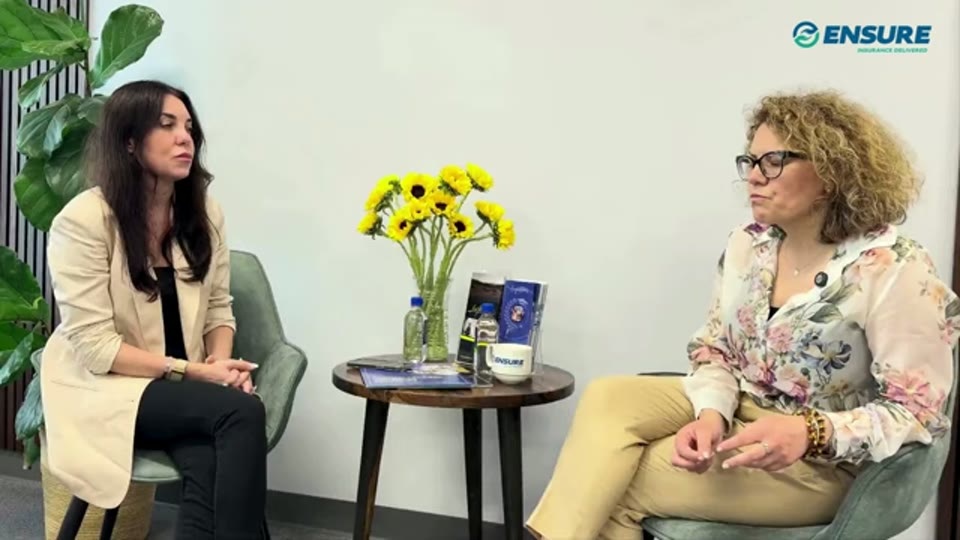
Ensure Inc. founder Monika Lajewska answered questions about new trucking companies and fleet insurance in an 8-minute interview recorded in the Ensure Inc. office. Press play, or jump to a moment below. The summary was written from the video’s captions, which are machine-generated, and checked against our published guide, Trucking Company Growth and Fleet Insurance.
What she covers (the moments link to YouTube):
- 0:32 – Why insurers limit how fast a new motor carrier can grow
- 2:39 – Why to talk to your agent before binding a policy, and what a mid-term cancellation can cost you
- 3:09 – How few insurers some new motor carriers can reach, and why year one is for building history
- 4:13 – How revenue-based and mileage-based fleet policies work, including reporting and the end-of-term audit
- 5:44 – Driver experience and turnover, and why a safety program matters
- 7:48 – Closing advice: build the team and the record before you apply for a fleet policy
The numbers she mentions, such as unit limits and years of history, vary by insurer and are not repeated here. Ask us what applies to your operation.
What affects the cost of commercial trucking insurance?
We do not publish premiums on this page. A price quoted without your trucks, drivers and losses is a guess, and a guess is not useful when you are comparing real proposals. These are the things insurers commonly ask about:
- Number, type, age and stated value of trucks and trailers
- Driver experience, license history and whether drivers are employees or contractors
- Cargo you haul and any special handling
- Radius, routes and states you operate in, and where the trucks are garaged
- How long you have held authority and your safety and inspection record
- Loss runs: the claims history from your current and prior insurers
- Mileage or gross revenue, because some programs rate on one of them
- Limits, deductibles, payment plan and the filings you need
The cheapest premium is not always the best policy. Compare coverage, limits, deductibles, exclusions and payment terms line by line, and ask what changed from your current policy. Our 60-day renewal checklist shows how.
How to get a commercial trucking insurance quote
Collect your business basics
Legal name, USDOT and MC numbers (or the date you plan to apply), garaging address, years in business and the ownership details on your registration.
List your equipment
Year, make, VIN and stated value for every truck and trailer, and whether each unit is owned, financed or leased.
List your drivers
Names, license details and experience for every driver, and whether each is an employee or a 1099 contractor.
Describe the work
Cargo types, routes and radius, brokers or direct shippers, mileage or gross revenue, and any contract insurance requirements such as UIIA.
Add your history
Your current declarations page, loss runs and renewal date if you already have a policy.
Compare options and confirm filings
Review limits, deductibles, exclusions and payment terms, then confirm the FMCSA or state filing and the certificates of insurance you need. Coverage is bound only when the insurer confirms it in writing.
How does commercial trucking insurance compare with the alternatives?
What are the most common commercial trucking insurance mistakes?
- Letting the filing lapse. FMCSA says entities must keep proof of insurance on file to avoid revocation proceedings (FMCSA).
- Filing details that do not match the registration. FMCSA says the business name and address must match exactly, or the grant of authority is delayed (FMCSA).
- Growing past the insurer’s limits. A mid-term cancellation for rapid growth makes the next placement harder (founder interview; growth guide).
- Assuming cargo is optional because federal rules do not ask for it. Many brokers still require it (Motor Carriers page).
- Starting renewal in the last week. Start 45 to 60 days early (renewal checklist).
- Not reporting changes. Tell your agent about new trucks, drivers, routes, cargo and contracts before they affect underwriting (renewal checklist).
- Treating non-trucking liability as primary liability. They answer different situations (Owner-Operator page).
How do you choose commercial trucking insurance? A five-step checklist and our bottom line
Our recommendation: decide your authority setup, get primary liability on file, add what your contracts demand, cover your people, and compare whole proposals, in that order.
- Pick your authority setup first. Leasing onto a motor carrier or running your own MC authority decides who sets your minimums.
- Put primary liability on file. FMCSA will not grant operating authority until the minimum is on file. Confirm your BMC-91 or BMC-91X on the record after every renewal or carrier change.
- Add what your contracts demand. Cargo for broker work, the UIIA package for intermodal work, and certificates for every holder.
- Cover the people. Workers’ compensation for employee drivers, and occupational accident for 1099 drivers and leased owner-operators.
- Compare whole proposals, then calendar the renewal. Look at limits, deductibles, exclusions and payment terms, and start the renewal 45 to 60 days before expiry (renewal checklist).
Next step: send your details to an agent before you book your first load, or 45 to 60 days before renewal, so filings, certificates and limits line up before a broker asks for them.
What do commercial trucking insurance terms mean?
Who will you talk to at Ensure Inc.?
Ensure Inc. was established in 2015 by Monika Lajewska as a one-woman operation, and it describes expertise in transportation accounts as its foundation. Its stated mission is to ensure that clients make informed insurance decisions that fit their needs.
Three people on the team carry the title Transportation Risk Specialist, which is also the name of a designation from the Motor Carrier Insurance Education Foundation (MCIEF). MCIEF describes it as eight classes and 40 continuing-education hours covering trucking risk, underwriting and coverage. MCIEF. The job titles come from our public team pages; we do not reproduce individual certificates here, so ask when you call.
What do clients say?
Our About us page shows a Google review widget that read “Based on 84 reviews” when we checked on October 30, 2026. Three of the reviews shown there, word for word and not edited:
“Ensure does my truck insurance as an owner-operator. Kamila is my agent, always fast and helpful. Highly recommend.”
“Great agency to work with. Kamila handles all our trucking insurance and she's always quick to respond and knows what she's doing. Highly recommend her and the Ensure team.”
“I’ve had a great experience working with this insurance agency. They are always quick to respond, easy to communicate with, and genuinely work hard to find the best options for their clients. Great customer service and a team you can trust. Highly recommended!”
Source: the Google review widget on our About us page, read on October 30, 2026. They carry no review markup. Claims assistance is listed on our owner-operator page.
Independent insurance agency, established in 2015, with transportation accounts as its foundation. Trucking questions go to the Transportation Risk Specialists and agents listed above.
Office: 101 Lions Dr Ste 110, Barrington, IL 60010 · Phone: 1-847-316-9933 · Email: request@yourensure.com · Meet the whole team →
Trucking insurance in Polish, Ukrainian and Russian
Zespół Ensure Inc. w Barrington pomaga właścicielom ciężarówek (owner-operator), nowym firmom z MC authority i flotom. Rozmawiamy po polsku. Zadzwoń: 1-847-316-9933.
Команда Ensure Inc. у Баррінгтоні допомагає власникам вантажівок (owner-operator), новим компаніям з MC authority та автопаркам. Ми спілкуємося українською. Телефон: 1-847-316-9933.
Команда Ensure Inc. в Баррингтоне помогает владельцам грузовиков (owner-operator), новым компаниям с MC authority и автопаркам. Мы говорим по-русски. Телефон: 1-847-316-9933.
Frequently Asked Questions About Commercial Trucking Insurance
Clear answers to common questions about Commercial Trucking Insurance. Open a question to read the answer and source. Last verified: October 30, 2026.
What is commercial trucking insurance?
It is the set of commercial policies that covers a for-hire trucking operation: primary (auto) liability first, then cargo, physical damage, non-trucking liability, occupational accident, trailer interchange, general liability and workers’ compensation as the operation requires. A personal auto policy is not written for hauling freight for pay. Which coverages you need depends on whether you are an owner-operator, run your own MC authority, run a fleet or haul intermodal freight.
Source: Ensure Inc. service pages: Owner-Operator, Motor Carriers, Fleet Coverage.
How much does commercial trucking insurance cost in Chicago?
There is no single price. The premium depends on your trucks, drivers, cargo, radius, authority history and loss record, so a number without those details would be a guess. Insurers commonly ask about the number and type of units, stated values, driver experience and records, cargo, where you operate, how long you have held authority and your loss runs. Some programs rate on mileage or gross revenue. Send those details to Ensure Inc. and we will price real options from the insurers available to your operation.
Source: Ensure Inc. quote workflow; see also our renewal checklist.
What is the minimum insurance required for a for-hire truck?
For most for-hire carriers of non-hazardous property in interstate commerce, with vehicles of 10,001 pounds GVWR or more, the federal minimum primary liability is $750,000. The minimum is $1,000,000 for certain hazardous materials and $5,000,000 for explosives, poison gas and radioactive materials. A broker, shipper, lessor or state rule can require more than the federal minimum.
Source: FMCSA Insurance Filing Requirements and 49 CFR 387.9.
Do I need cargo insurance?
Federal rules do not set a cargo insurance requirement for most for-hire property carriers, but many brokers and shippers will not tender loads without it. FMCSA’s chart lists $0 federal cargo requirement for non-hazardous property carriers and $5,000 for household goods carriers. Our Motor Carriers page notes that brokers will not give you loads without cargo coverage. Limits and deductibles come from your contracts.
Source: FMCSA chart; Ensure Inc. Motor Carriers page.
What is the difference between commercial truck insurance, trucking insurance and semi truck insurance?
They are different names for the same family of commercial policies. Drivers, brokers and insurers use the terms interchangeably. What matters is the list of coverages, limits and endorsements on your policy and whether it matches your authority, equipment and contracts. “Semi truck insurance” usually points to tractor-trailer rigs.
Source: Ensure Inc. service pages.
What insurance does an owner-operator need?
Owner-operators typically carry non-trucking liability, physical damage and occupational accident coverage, plus bobtail coverage when it is required separately. If you run under your own MC authority you also need primary liability filed with FMCSA and, for most broker work, cargo coverage. A motor carrier you lease to will state what it requires.
Source: Ensure Inc. Owner-Operator page; FMCSA.
How do I insure a new MC authority?
Have primary liability in place and filed with FMCSA, because FMCSA will not grant operating authority until the minimum financial responsibility is on file. After you apply, your insurer files the BMC-91 or BMC-91X form for you. FMCSA says that if the filing is not made within 20 days of publication in the FMCSA Register, a decision is served and the application is dismissed unless you comply within 60 days. The name and address on the filing must match your registration exactly. Add cargo coverage if you plan to book loads through brokers.
Source: FMCSA Insurance Filing Requirements; new entrant safety audit guide.
What are the BMC-91, BMC-91X and MCS-90?
BMC-91 and BMC-91X are insurance filings an insurer makes with FMCSA to show primary liability coverage; the MCS-90 is an endorsement attached to the policy. FMCSA lists the MCS-90 endorsement (or MCS-82 for surety bonds) for all for-hire and interstate motor carriers. Your agent and insurer handle the paperwork. Our guide to Form E, Form H and BMC-91 explains the state and federal forms in more detail.
Source: FMCSA chart; Ensure Inc. state filings guide.
What happens if my trucking insurance lapses or is cancelled?
Your filings can drop off the FMCSA record, and FMCSA can start revocation proceedings against your operating authority. FMCSA says registered entities must maintain proof of insurance on file to avoid revocation proceedings and that keeping filings current is the entity’s responsibility. Call your agent before a cancellation notice, a carrier change or a missed payment date, and confirm the filing after any change.
Source: FMCSA Insurance Filing Requirements.
Does Illinois have its own trucking insurance rules?
Yes. A license or registration the Illinois Commerce Commission issues to a motor carrier of property has force only while proof of insurance or bond coverage is on file. Section 1425.20 adds that coverage for Illinois-domiciled carriers and Illinois-licensed intrastate carriers must come from an insurer admitted in Illinois, and it refers to Form E and Form H certificates. The text on the Illinois General Assembly site carries a 1994 source note, so confirm current requirements with the Commission before relying on it for an Illinois-only operation.
Source: 92 Ill. Adm. Code 1425.10 and 1425.20.
In which states does Ensure Inc. write commercial trucking insurance?
Ensure Inc. serves trucking clients in 13 states: Florida (FL), Georgia (GA), Illinois (IL), Indiana (IN), Iowa (IA), Minnesota (MN), North Carolina (NC), Ohio (OH), Pennsylvania (PA), South Carolina (SC), Tennessee (TN), Texas (TX) and Wisconsin (WI). Our office is in Barrington, Illinois, and we work with carriers in the other twelve states by phone and email. Insurer programs, filings and registrations differ by state, so we confirm what is available for your state, trucks and cargo before we quote. We have published the state rules we verified for Texas, Florida and Georgia.
Source: Ensure Inc., agency information of October 30, 2026; see the states table on this page.
Can a trucking company outside Illinois get a quote from Ensure Inc.?
Yes, if it operates in one of the 13 states we serve: FL, GA, IA, IL, IN, MN, NC, OH, PA, SC, TN, TX, WI. Send your USDOT or MC number, trucks and trailers, drivers, cargo, radius and renewal date by phone or email. You do not need to visit the Barrington office. If your trucks are garaged in a state that is not on the list, call and we will tell you what is possible.
Source: Ensure Inc. contact page.
Do trucking insurance requirements change from state to state?
Yes. The federal minimums apply to interstate for-hire carriers, and each state adds its own rules for the vehicles that operate there, so the limits, the filings and the agencies differ. For most non-hazardous for-hire interstate carriers with a vehicle of 10,001 pounds GVWR or more, the federal minimum is $750,000. Examples from state sources we read: Texas lists $500,000 for carriers over 26,000 pounds that must register with TxDMV, and Florida sets $50,000, $100,000 and $300,000 tiers by weight from 26,000 pounds. Read each state page for the full table and its sources. Pages: Texas, Florida and Georgia.
Source: FMCSA Insurance Filing Requirements; TxDMV Motor Carrier Handbook (May 2025); Fla. Stat. 627.7415.
Do I need IRP plates and an IFTA license, and are they insurance?
They are not insurance. IRP is apportioned registration through the Illinois Secretary of State, and IFTA is a fuel tax license through the Illinois Department of Revenue. Apportionment is required for vehicles operating in two or more IRP jurisdictions with a combined gross weight over 26,000 pounds, or a power unit with three or more axles. IFTA applies to a person based in a member jurisdiction who operates qualified motor vehicles in two or more member jurisdictions; Illinois-based carriers apply with Form MFUT-12 through MyTax Illinois and file quarterly Form MFUT-15 returns, even for a quarter with no travel. Ensure Inc. places insurance and does not process these programs.
Source: Illinois Secretary of State; Illinois Department of Revenue; our IFTA tips.
Do you insure Chicago intermodal and drayage trucks that need UIIA coverage?
Ensure Inc. reviews UIIA insurance packages for intermodal motor carriers, including auto liability, general liability, the hold-harmless endorsement and trailer interchange. IANA’s UIIA page calls for a $1 million combined single limit auto liability policy (Any Auto, Scheduled and Hired, or All Owned and Hired), $1 million general liability with no self-insured portion, and the UIIE-1, CA 23 17 or TE 23 17B hold-harmless endorsement. Cargo and trailer interchange limits vary by equipment provider. The UIIA system expires policies at 12:01 a.m. on the expiration date, so renew early.
Source: IANA UIIA Insurance Requirements; Ensure Inc. UIIA guide.
What is trailer interchange insurance?
It covers physical damage to non-owned trailers, chassis or containers while they are in your care, custody or control. The UIIA says it must cover comprehensive and collision as well as fire and theft, and that most equipment providers require some form of it. Limits and deductibles vary by provider.
Source: IANA UIIA Insurance Requirements; Ensure Inc. trailer interchange guide.
What is occupational accident insurance and who needs it?
It is injury coverage for independent contractors that can include medical expenses, temporary and permanent disability, accidental death and dismemberment and survivor benefits. It is aimed at 1099 drivers who are not covered by a carrier’s workers’ compensation plan. Fleets that lease owner-operators often recommend it.
Source: Ensure Inc. Contract Driver page; Fleet Coverage page.
What do I need to get a quote?
Your USDOT and MC numbers (or your plan to apply), a list of trucks and trailers with VINs and values, a driver list, cargo and routes, and loss runs or your current policy if you are renewing. The more complete the list, the fewer follow-up questions. If something is missing, call anyway and we will start with what you have.
Source: Ensure Inc. quote workflow.
How fast can I get a certificate of insurance (COI)?
Our Motor Carriers page lists same-day insurance certificates as a service; actual timing depends on whether the policy is bound and paid and on the insurer. Send your certificate-holder list before the effective date so brokers and shippers receive their documents when the policy starts.
When should I start my commercial truck insurance renewal?
Start 45 to 60 days before the policy expires. That leaves time for loss runs, unit and driver updates, filing checks and a side-by-side comparison of proposals.
Source: Ensure Inc. 60-day renewal checklist.
Can Ensure Inc. review a policy written by another agency?
Yes. Send the declarations page, loss runs, unit and driver lists and your renewal date, and we will compare coverage, limits, deductibles and exclusions. Pricing and terms still depend on insurer underwriting.
Source: Ensure Inc. renewal checklist.
Can you insure box trucks, dump trucks or hotshot rigs?
Tell us the vehicle type, weight rating, cargo and radius, and we will tell you what is available for it. Insurer appetite depends on the vehicle, the state and your record, so we do not promise a market before we see the details. Vans and service vehicles are covered on our commercial auto page.
Source: Ensure Inc. Commercial Auto page.
Can a new trucking company grow its fleet quickly?
Usually not as fast as the owner would like. Insurers weigh operating history, stability and safety record, so new ventures face limits on how many units they can add in the first policy term. Ensure Inc. founder Monika Lajewska advises talking to your agent before you bind a policy, learning that insurer’s growth limits, and building a clean safety and out-of-service record in the first year, because a mid-term cancellation for rapid growth makes the next placement harder.
Source: Interview with Monika Lajewska (video summary) and Ensure Inc. growth guide.
When can a trucking company move to a revenue-based or mileage-based fleet policy?
Usually after several years of operating history; each insurer sets its own guidelines. These policies are rated on estimated mileage or gross revenue, may require periodic reporting, and end with an audit that can use IFTA mileage reports. If actual mileage or revenue is higher than the estimate you may owe additional premium, and if it is lower you may receive a return premium. Driver experience and turnover are part of the underwriting.
Source: Interview with Monika Lajewska (video summary) and Ensure Inc. growth guide.
Does the move to FMCSA’s Motus system change my insurance?
Motus is FMCSA’s new registration system. Insurers and other filers use it for filings, and carriers still need proof of insurance on file. FMCSA says supporting companies make filings in Motus once it is open to all users in 2026 and that registered entities must keep their filings current. If FMCSA or your insurer asks you to act, start with our Motus guide or call us.
Source: FMCSA: What is Motus; FMCSA Insurance Filing Requirements; Ensure Inc. Motus guide.
Which languages does your trucking team speak?
English, Polish, Ukrainian and Russian. The public team page lists each person’s languages. Kamila Golebiowska speaks English and Polish, Olesia Pilat English, Ukrainian and Russian, and Mila Plyuta Vakalyuk English, Ukrainian, Polish and Russian.
Source: Ensure Inc. About us page, checked October 30, 2026.
Where is Ensure Inc. and which areas do you serve?
Our office is at 101 Lions Dr Ste 110, Barrington, IL 60010. We serve trucking clients in Barrington, Palatine, Arlington Heights, Schaumburg, the greater Chicago suburbs and the City of Chicago. Beyond the Chicago area we serve trucking clients in 13 states: FL, GA, IA, IL, IN, MN, NC, OH, PA, SC, TN, TX, WI. Hours are Monday to Friday 8:00 AM to 5:00 PM and Saturday 10:00 AM to 2:00 PM Central. If your trucks are garaged in another state, call and we will confirm what is available, because insurer programs vary by state.
Source: Ensure Inc. contact page.
- FMCSA Insurance Filing Requirements (page last updated March 26, 2026) and What is Motus (last updated May 21, 2026), read on October 30, 2026.
- 49 CFR 387.9 as shown by Cornell LII, which lists amendments through 91 FR 45660 (July 21, 2026).
- 92 Ill. Adm. Code 1425.10 and 1425.20 on the Illinois General Assembly site.
- Illinois Secretary of State, Commercial and Farm Trucks (IRP) and Illinois Department of Revenue, IFTA.
- IANA UIIA Insurance Requirements, CMAP freight page and MCIEF.
- Ensure Inc.’s own service pages and About us page, checked on October 30, 2026. The list of 13 states comes from Ensure Inc.’s own information (October 30, 2026).
- State rules for Texas, Florida and Georgia: primary sources are listed on each state page.
- The founder interview on YouTube (8 min 19 s): we read its machine-generated captions on October 30, 2026, wrote the summary from them and checked it against our published growth guide.
- Video captions. They are machine-generated, so the video summary avoids exact figures such as unit limits and years of history.
- Prices. We have no verified price that applies to your operation, so none is shown.
- Insurer availability. Appetite and state licensing change. This page does not name insurers or promise a market for any vehicle type.
- Illinois intrastate limits. The Illinois rules we read are dated 1994 in their source note. Confirm current intrastate requirements with the Illinois Commerce Commission.
- CMAP figures. The page is undated and most numbers are from 2016 and 2017.
- Certificates and licenses. We did not reproduce individual designation certificates or license numbers here. The states table lists the states Ensure Inc. serves, not producer license numbers.
- Rules outside Illinois. This page reads the Illinois sources. Rules for other states are on their own pages where we have read the sources, and we confirm the rest before quoting.
Spotted an error? Email request@yourensure.com and we will check it and log the fix in the Update Log below.
This page is general information about commercial trucking insurance, not legal advice or an offer of coverage. Coverage, limits, eligibility and price depend on the policy form and the insurer’s underwriting, and coverage is bound only when confirmed in writing.
- FMCSA, Insurance Filing Requirements (last updated March 26, 2026)
- FMCSA, What is Motus: USDOT Registration System? (last updated May 21, 2026)
- 49 CFR 387.9, Financial responsibility, minimum levels (Cornell LII)
- 92 Ill. Adm. Code 1425.10, Licenses conditioned upon compliance with insurance requirements
- 92 Ill. Adm. Code 1425.20, Proof of insurance or bond coverage
- Illinois Secretary of State, Commercial and Farm Trucks (IRP apportioned plates)
- Illinois Department of Revenue, International Fuel Tax Agreement (IFTA)
- Intermodal Association of North America, UIIA Insurance Requirements
- Chicago Metropolitan Agency for Planning, Maintain the region’s status as North America’s freight hub
- Motor Carrier Insurance Education Foundation, Transportation Risk Specialist designation
- Ensure Inc., About us and Services
- Ensure Inc. founder interview: Trucking Company Growth & Fleet Insurance (YouTube, 8:19, uploaded August 17, 2026)
- Ensure Inc., Trucking Company Growth and Fleet Insurance guide
Update log
- October 31, 2026: Added the 13 states Ensure Inc. serves (full and short names), a states table, three FAQs, and dedicated pages for the states with sourced rules (Texas, Florida, Georgia).
- October 31, 2026: Added inline sources to the figures, a five-step choosing checklist, an at-a-glance fact table, the founder interview video with a written summary, a coverage finder, a comparison table, a common-mistakes list, client quotes and two FAQs.
- October 30, 2026: Page published. Sources checked October 30, 2026.
- Corrections: request@yourensure.com.